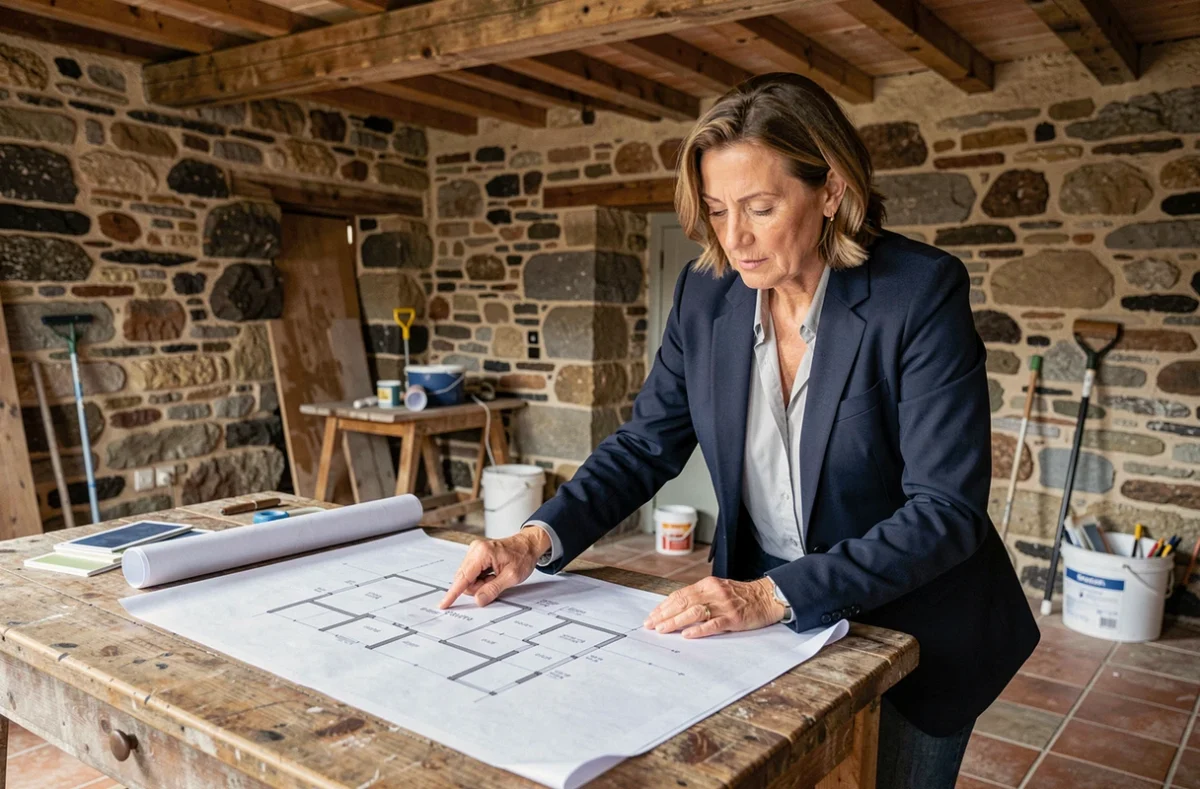
A real estate project in Haute-Loire is prepared differently than a purchase in a tense area. Prices per square meter remain among the lowest in the Auvergne-Rhône-Alpes region, but this accessibility masks technical constraints that buyers sometimes discover too late: soil type, energy performance of old buildings, local regulations on natural risks. Succeeding in your project here requires mastering these parameters even before the first visit.
Shrink-swell of clays: the risk to check before any purchase offer in Haute-Loire
Haute-Loire is affected by the shrink-swell risk of clays, a phenomenon that causes structural cracks in individual houses. The Géorisques map indicates a level of exposure by parcel, but it does not replace a diagnosis of the existing building’s structure.
For exposed buildable land, a prior geotechnical study may be mandatory. For new constructions, specific design rules or a design geotechnical study may apply. From 2024-2025, these obligations are being strengthened.
Before signing a preliminary agreement, a check on Géorisques allows for the identification of natural, mining, or technological risks that could alter the budget or make the project unviable. The risk report must be communicated at the beginning of the transaction, not treated as a last-minute formality. In sales, this information must be included in the transaction file. In rentals, it must be attached to the lease and communicated from the first visit.
A buyer who spots a parcel on immobilier-pinatel.com saves time by immediately cross-referencing the location with the clay exposure map.
Energy renovation and old property purchase in Haute-Loire: anticipating the real budget
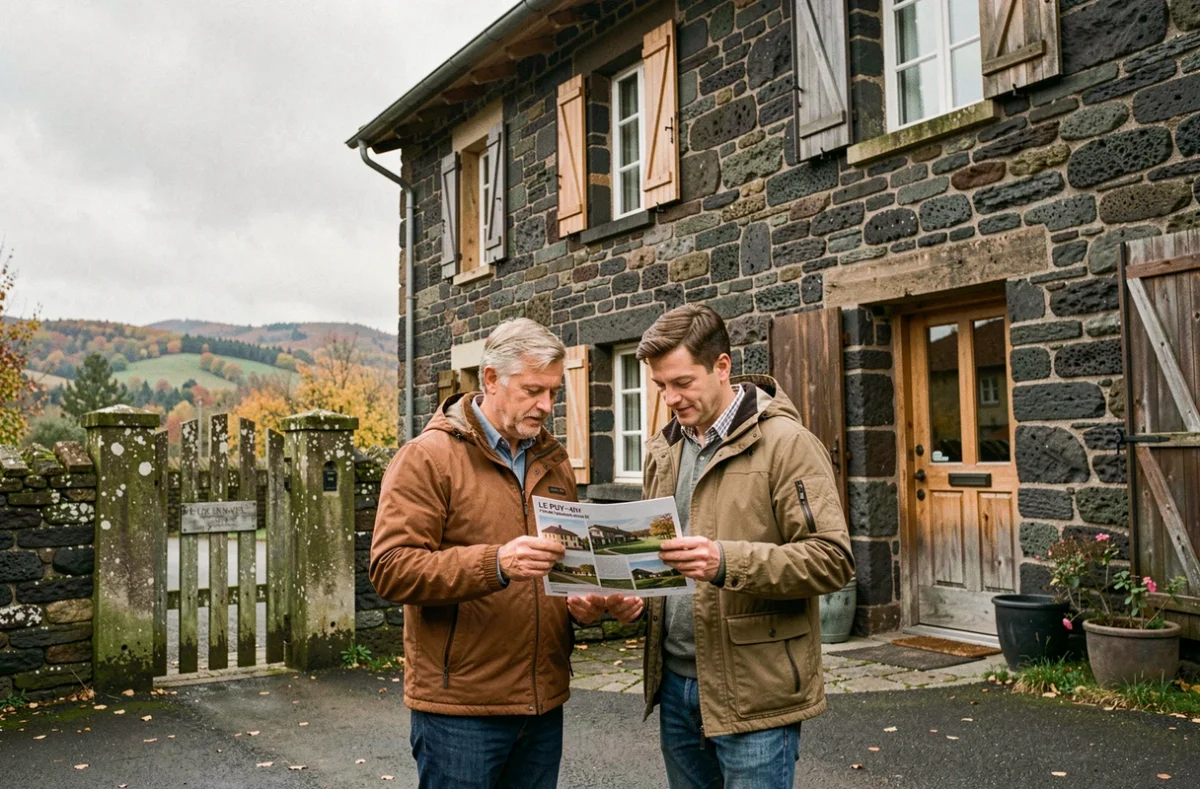
The real estate stock in Haute-Loire includes a significant share of old housing. Buying a stone house at a low price without assessing the cost of bringing it up to energy standards amounts to underestimating the total project budget.
Public schemes now distinguish between minor renovations and major renovations. The former involve a single action (changing windows, insulating a ceiling). The latter require mandatory support from an approved operator, like Mon Accompagnateur Rénov’.
What the DPE changes concretely
A property classified F or G leads to increasing restrictions on rental. For a rental investment, the energy performance diagnosis directly conditions future profitability. A property classified E or better offers a more comfortable margin for maneuver.
The renovation schedule must be integrated from the purchase. Waiting until the signing to start getting quotes creates a gap of several months between acquisition and the property being ready for use, whether for living in or renting out.
- Request the DPE before the first visit to eliminate overly energy-consuming properties without wasting time
- Have priority work (insulation, heating) estimated by a local contractor before making an offer
- Check eligibility for public aid based on the type of renovation planned (minor or major)
- Incorporate the cost of the work into the financing plan presented to the bank, not as an afterthought
Borrowing capacity and notary fees: calibrating your real estate budget
Borrowing capacity determines the maximum amount a bank can grant. It is based on a simple calculation: stable income minus fixed charges, with a debt ratio that generally does not exceed one-third of net income.
In Haute-Loire, lower purchase prices than in metropolitan areas often allow for financing a project with a modest personal contribution. However, ancillary costs remain proportionally heavier on a cheap property.
Often underestimated expenses
Notary fees represent a more visible part of the total budget when the property price is low. On an old property, they reach a significant proportion of the purchase price. On new properties, they are reduced, which constitutes a real savings lever.
Loan guarantee fees, borrower insurance, and any real estate agency fees should be included in the initial calculation. A realistic real estate budget adds together the property price, transaction fees, renovation costs, and a safety margin for unforeseen expenses.

Rental project in Haute-Loire: yield and daily management
The rental demand exists in Haute-Loire, concentrated around Puy-en-Velay and nearby towns in the Loire region (Monistrol-sur-Loire, Yssingeaux). The gross yield may seem attractive due to low purchase prices, but the net yield depends on rental management and vacancy.
A well-located, properly renovated property with a minimum E rating on the DPE rents out easily. A geographically isolated or poorly maintained property generates vacancy periods that erode profitability.
- Target municipalities with identifiable economic or student activity to limit vacancy risk
- Plan an annual management budget (property tax, routine maintenance, non-occupant owner insurance)
- Compare the cost of delegated rental management to an agency with that of direct management, considering the time spent
The choice between direct management and a rental management mandate depends on the distance between the owner and the property, and the number of units owned. For a single apartment nearby, direct management remains viable. Beyond that, delegation avoids costly time-consuming trips.
A real estate project in Haute-Loire relies less on negotiating the purchase price (already low) than on mastering hidden costs: geotechnical risks, energy renovation, transaction fees. Checking the soil, estimating the work, and calibrating financing before visiting a single property remains the most reliable sequence to avoid unpleasant surprises.