When partially emptying a pool or watering with tap water in the middle of summer, the question of chlorine quickly arises. Do garden plants tolerate this treated water without flinching, or are we at risk of scorching an entire flowerbed while trying to save water? The answer depends less on the chlorine itself than on its concentration and how it is used.
Free chlorine and chloramines: two distinct problems for your plants
Chlorine is often referred to as a single product, but the water that comes from the tap or a pool does not contain the same form of chlorine. Free chlorine is the active fraction that dissipates fairly quickly into the air. Chloramines, on the other hand, result from the combination of chlorine with nitrogen present in the water. They are much more stable.
This distinction changes everything for the garden. Allowing a watering can to sit in the air for a few hours does indeed reduce free chlorine. But letting the water sit does not eliminate chloramines, which can persist for days. Many gardening articles stop at the advice “let it sit for 24 hours” without mentioning this point, which can be misleading if your supply network distributes water treated with chloramines.
To find out what your municipality uses, you can consult the quality sheet attached to your water bill or the annual report from the ARS. Details on the tolerance of plants to chlorine can be found on iDéco Maison in a comprehensive guide on the subject.
Chlorine concentration: the threshold that makes a difference in the garden
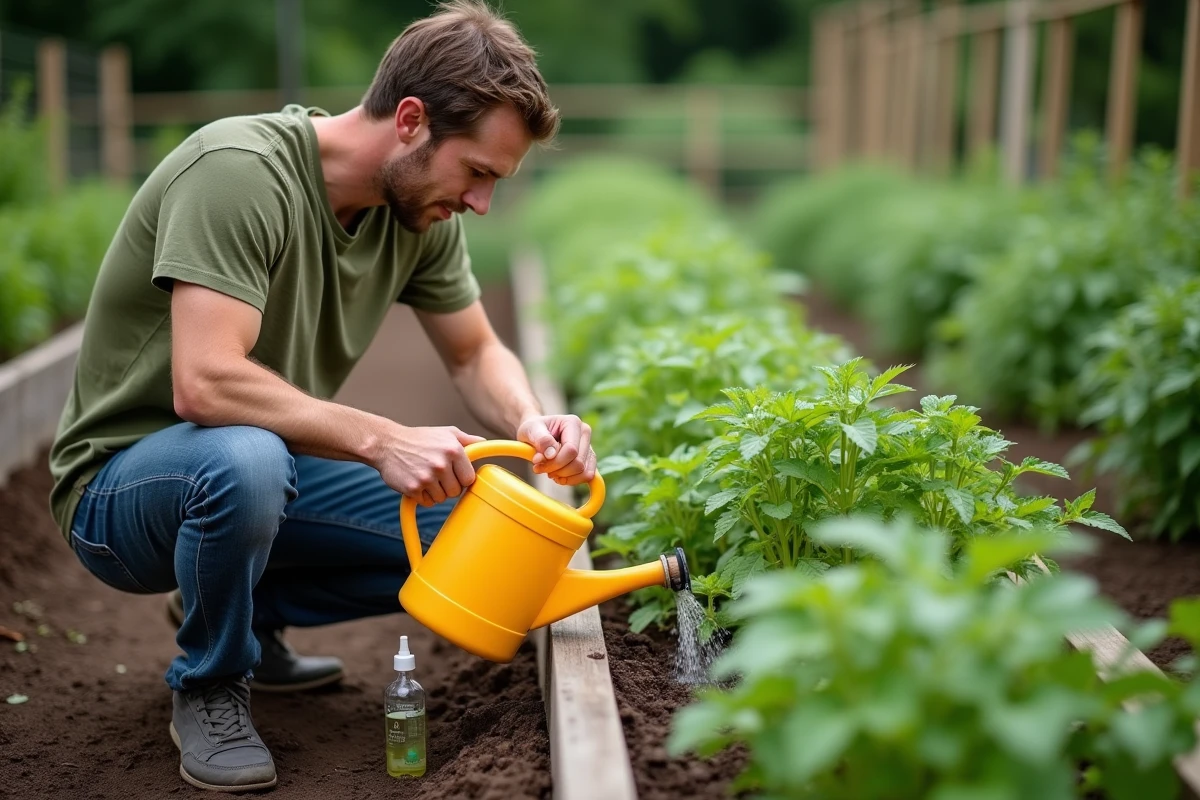
Tap water contains a low concentration of residual chlorine, designed to be safe for human consumption. At this level, most garden plants (roses, perennials, grass, shrubs) tolerate regular watering without visible damage.
The problem begins with pool water. After routine treatment, the chlorine concentration in a pool far exceeds that of the supply network. And after a shock chlorine treatment, levels can reach a point that burns roots and leaves on direct contact. Watering just after a shock treatment is the riskiest scenario for garden flora.
Signs of excess chlorine on plants
- Yellowing of leaf edges that progresses inward, often confused with nitrogen deficiency
- Whitening or discoloration of young shoots, a sign that chlorophyll is being attacked
- Sudden slowdown in growth without apparent cause (neither drought nor known deficiency)
These symptoms appear more quickly on sensitive species: ferns, hydrangeas, camellias, strawberries. In contrast, a laurel or olive tree can better withstand slightly chlorinated water.
Pool water for watering: precautions before emptying the pool
When emptying a pool for wintering or after treatment, the temptation to direct the water to the flowerbeds is logical. Several cubic meters of clean water, it seems a waste to lose it. The main constraint is not just chlorine: it is also pH, stabilizer, and any residual algicide.
A pH that is too high (above neutral) disrupts nutrient absorption by the roots. The stabilizer (cyanuric acid), often present in quantity in pools treated with stabilized chlorine, accumulates in the soil and does not break down easily. This compound is rarely mentioned in watering guides, but it poses a real risk to the soil in the medium term.
Protocol to limit damage
- Stop chlorine treatment several days before draining and check that the residual level has dropped to a very low level
- Test the pH of the pool water: it should be close to neutrality before any spreading on the lawn or flowerbeds
- Avoid concentrating all the water in the same spot, to prevent saturating a soil area with chemical residues
- Never use water from a bromine-treated pool for watering, as bromine is more persistent and aggressive than chlorine for plants
Alternatives to chlorine to protect the flora around the pool
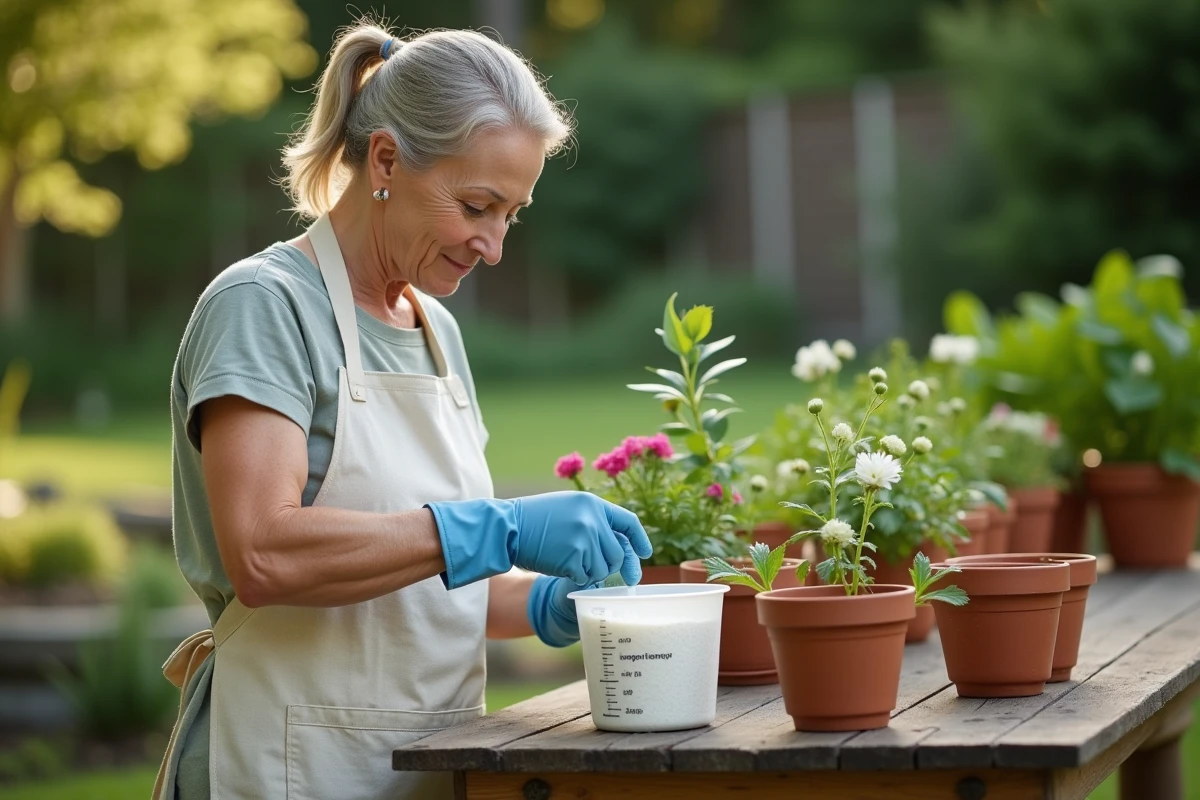
For gardeners who regularly water with tap water, the simplest action remains to fill watering cans the day before and leave them in the open air. Free chlorine partially evaporates, which is sufficient for most garden plants. However, if your water contains chloramines (reports vary on this point depending on municipalities), an activated carbon filter attached to the garden tap remains the most reliable solution.
Rainwater remains the best option for sensitive species. It is naturally soft, without chlorine or lime. A collector connected to a gutter covers a good part of watering needs in season.
For pools, chlorine-free treatment systems (UV, salt electrolysis, ozone) generate less aggressive water for the garden during partial drainages. Salt electrolysis produces chlorine, but at lower concentrations and without added stabilizer, which limits the accumulation of residues in the soil.
The amount of chlorine that does not endanger your plants depends less on an absolute number than on the type of chlorine, the frequency of watering, and the sensitivity of each species. Rested tap water and dechlorinated pool water cover almost all cases. The reflex to maintain: test before watering, especially after a pool treatment.