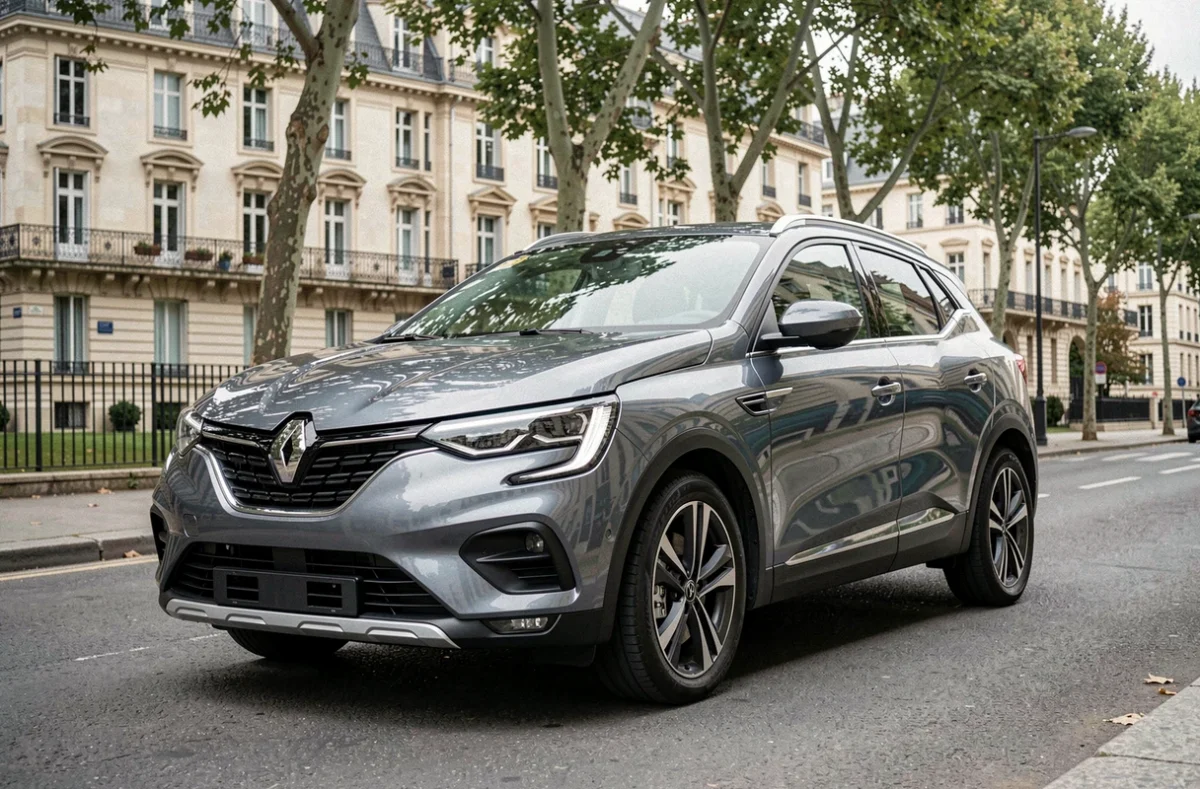
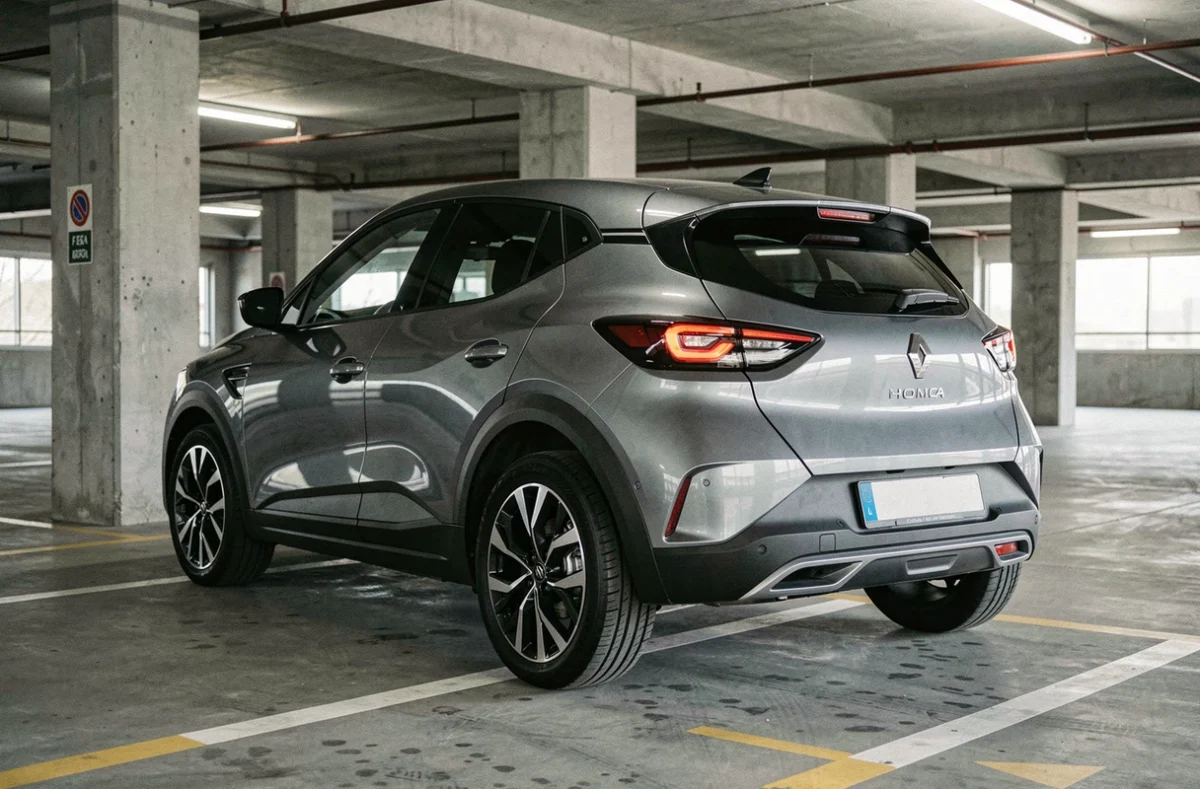
The storm gray shade offered on the Renault Symbioz raises a recurring question among buyers: how does this metallic paint perform once it leaves the configurator, in natural light and facing the daily challenges? Between actual visual rendering, resistance to micro-scratches, and maintenance constraints, several parameters need to be measured before validating this color choice.
Storm gray paint code and identification on the Renault Symbioz
Before any aesthetic considerations, the most concrete data to master remains the paint code. The code KQJ is associated with storm gray in Renault configurations, as shown in an example of a Belgian configuration of the Symbioz. This reference appears on the vehicle’s label, usually placed on the door pillar or in the engine compartment.
A technical point often overlooked: the code found on an online catalog or a retail site does not replace verification on the specific vehicle. In case of doubt, a dealer can find the exact reference from the VIN number. This precaution avoids mistakes when purchasing a touch-up pen or a spray can.
To delve deeper into the actual rendering, reflections, and feedback on storm gray on the Renault Symbioz, several owners share their observations after several months of use.
| Element | Detail |
|---|---|
| Paint code | KQJ (to be verified on the vehicle label) |
| Type of shade | Metallic |
| Model concerned | Renault Symbioz (hybrid range) |
| Location of code | Door pillar or engine compartment |
| Additional verification | Via the VIN number at a dealer |
Touch-up paint for storm gray: why the code alone is not enough
A touch-up on a metallic shade like storm gray is not just about ordering a pot with the correct reference. On a vehicle that has already been exposed to UV rays for several months, or whose part has already been repainted, the actual shade may differ from the original formula.
In this case, a body shop equipped with a spectrophotometer measures the color directly on the bodywork. This device analyzes the pigments and reflectance to produce an adjusted formula. The difference between a visible touch-up and an invisible one often hinges on this stage.
Shade variations according to the vehicle’s age
Metallic paints contain aluminum particles that reflect light directionally. Over time, surface oxidation slightly alters this reflection. A new storm gray Symbioz and the same vehicle after two or three years of exposure do not present exactly the same rendering under low-angle lighting.
This evolution remains subtle to the naked eye in daily life, but it becomes evident during a localized touch-up. Ordering paint solely based on the KQJ code, without measuring on the vehicle, risks a slight tone mismatch on the repaired area.
Daily maintenance of storm gray: what usage reveals
Gray, in all its shades, is often presented as a compromise between white (which hides dust) and black (which shows scratches less). Storm gray, with its metallic component, falls into an intermediate zone where dirt is less visible than on black but micro-scratches remain perceptible in direct light.
- Circular wash marks (swirl marks) appear under low-angle sunlight, as with any dark metallic shade. Hand washing with a microfiber mitt and two buckets limits their appearance.
- Bird droppings and tree sap must be removed quickly: their acidity attacks the varnish, and on a dark shade, the residual mark is more visible than on a pearlescent white.
- A ceramic treatment or light polish once or twice a year helps maintain the characteristic depth of reflection of storm gray, where a simple pass through a car wash is not sufficient.
Comparison with other shades in the Symbioz color chart
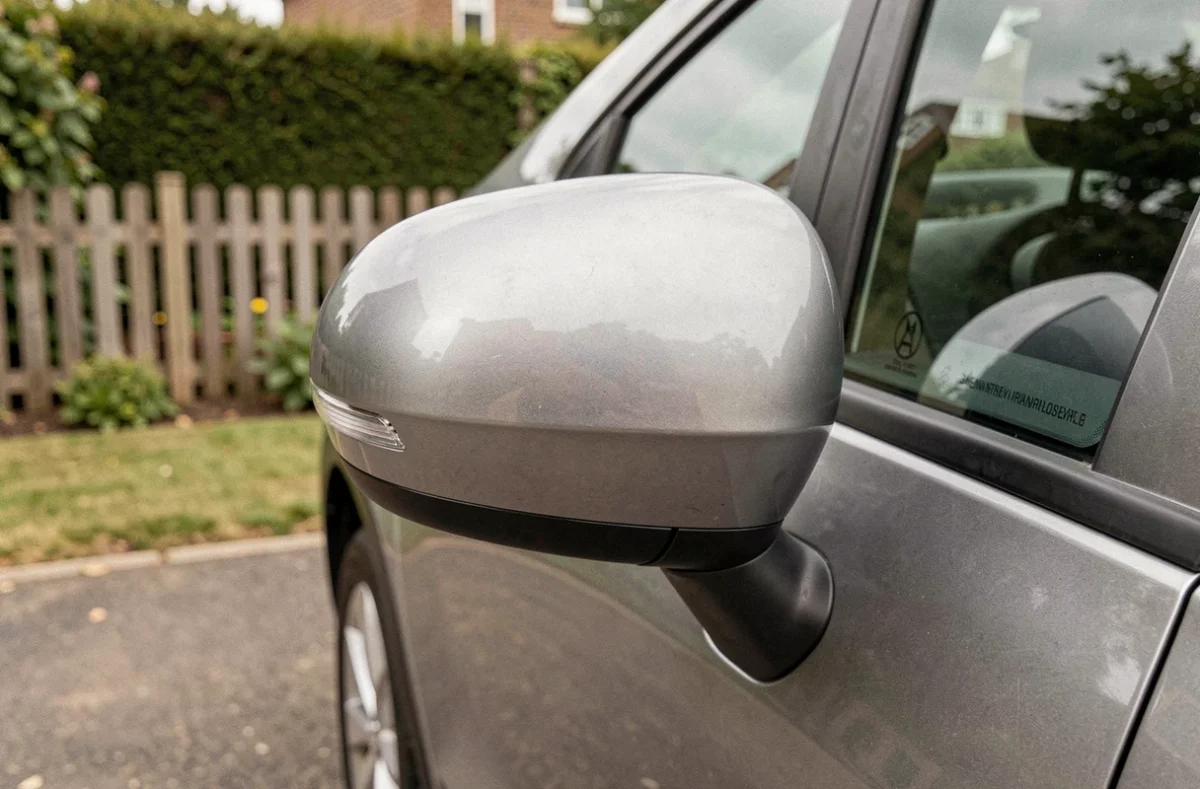
The Renault configurator offers several colors for the Symbioz, including pearlescent white. Storm gray stands out with bluish reflections depending on the angle of lighting, while pearlescent white plays on warmer pearlescent reflections. In terms of practicality, pearlescent white hides road dust better, while storm gray offers a more expressive rendering but requires more frequent washing to maintain its shine.
Dark metallic shades better conceal small body imperfections (minor impacts, metal waves). However, they make stone chips more visible by contrast with the exposed metal or primer.
Leasing return and condition of storm gray paint
For drivers in LOA or LLD, the condition of the paint at the time of return has direct financial consequences. The general conditions of certain networks, such as those published by the Faurie group, distinguish damages according to their size, number, and nature. Stone chips with paint degradation are among the evaluated elements.
On a dark metallic shade, an unretouched stone chip is easier to spot than a similar defect on a light bodywork. A touch-up pen with the KQJ code applied within days of the impact limits degradation and reduces the risk of charges at the time of the return inspection.
This parameter weighs in the decision at the time of configuration. Choosing storm gray on a hybrid Symbioz used for mixed journeys (highway and city) implies accepting a bit more attentive maintenance than on a light shade, or budgeting for a protective treatment upon delivery.
Storm gray on the Renault Symbioz remains a shade that rewards attentive owners: its metallic reflections gain depth on a well-maintained bodywork, and the KQJ code allows for anticipating localized touch-ups as long as it is verified directly on the vehicle.