Cornerstones of interior design, coffee tables offer much more than just a support for a cup of coffee or a magazine. They reveal the soul of a room, reflect the personality of its inhabitants, and combine style and functionality in a space often overlooked. The coffee table is not just a piece of furniture, but a central element that sets the tone and ambiance of a room. Its choice, placement, and aesthetics influence the energy of a living room and the daily life of its occupants.
Origins and evolution of the coffee table
Coffee tables have a rich history that dates back several centuries. They have evolved from court furniture to functional and decorative pieces in our modern homes.
- Asian origin: Inspired by Japanese tea tables, coffee tables became popular in the 19th century in the West, symbolizing a shift towards a more informal and ground-level lifestyle.
- Representation of lifestyle: Over the decades, designers have experimented with various materials such as wood, glass, and metal, reflecting the cultural and aesthetic trends of each era.
- Functional evolution: Originally designed to accommodate tea ceremonies, they have transformed to meet modern needs, becoming storage spaces, technology supports, or art objects.
Materials that redefine design
The materials chosen for a coffee table influence not only its appearance but also the feel it brings to a space. Each material tells a different story.
Wood, whether solid or engineered, offers an unmatched warmth and fits perfectly into contemporary or traditional interiors. Glass, on the other hand, adds lightness and transparency, creating an illusion of space in small living rooms. Metal, often associated with industrial designs, brings a modern and sleek touch.
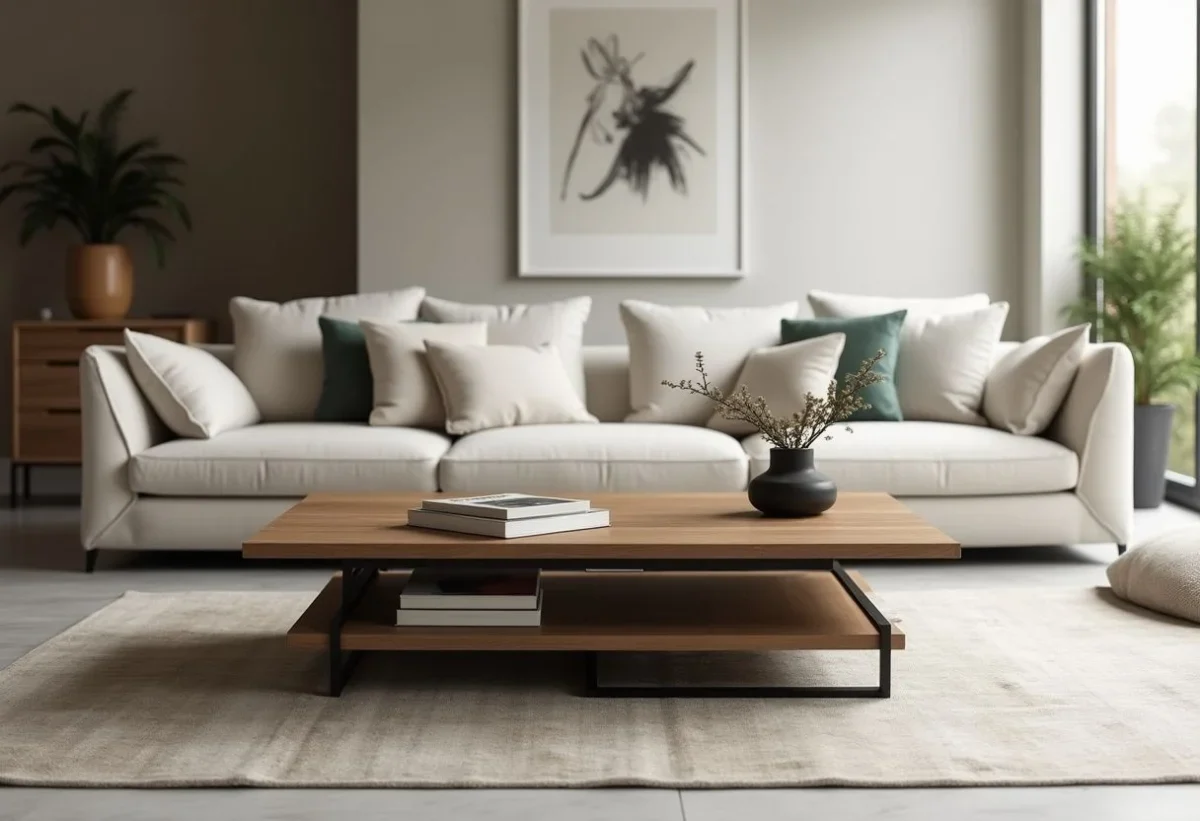
Material combinations are particularly trendy, marrying wood and metal or glass with bold structures. These blends allow for the creation of unique pieces that not only serve a function but also become artistic statements at the heart of the living room.
Aesthetics and functionality: the perfect marriage
The quest to find the ideal coffee table is as much an art as it is a science. Dimensions, shape, and functionality must be carefully considered to harmonize with the rest of the interior.
The dimensions of a coffee table should be proportional to the available space and other furniture. Too large, it clutters; too small, it goes unnoticed. The shape also influences circulation in the room: rectangular for a classic space, round to soften the lines of a modern living room.
As for functionality, many coffee tables today offer hidden storage compartments, drawers, or even lift-top surfaces to adapt to work or leisure needs. This subtle marriage of aesthetics and practicality defines the true essence of a well-chosen coffee table.
Integrating a coffee table into your living space
Choosing the ideal location for your coffee table can transform the energy of a room. The positioning should consider both conviviality and convenience.
- Proximity and use: Ensure that your coffee table is within reach of the seating while leaving enough space for free movement.
- Focal point: Place it in such a way that it draws the eye without overwhelming the room, making it the link between the different elements of the living room.
- Decoration and accessories: Use books, plants, or art objects to add personal touches without cluttering the surface. These decorative elements enrich the overall aesthetic.