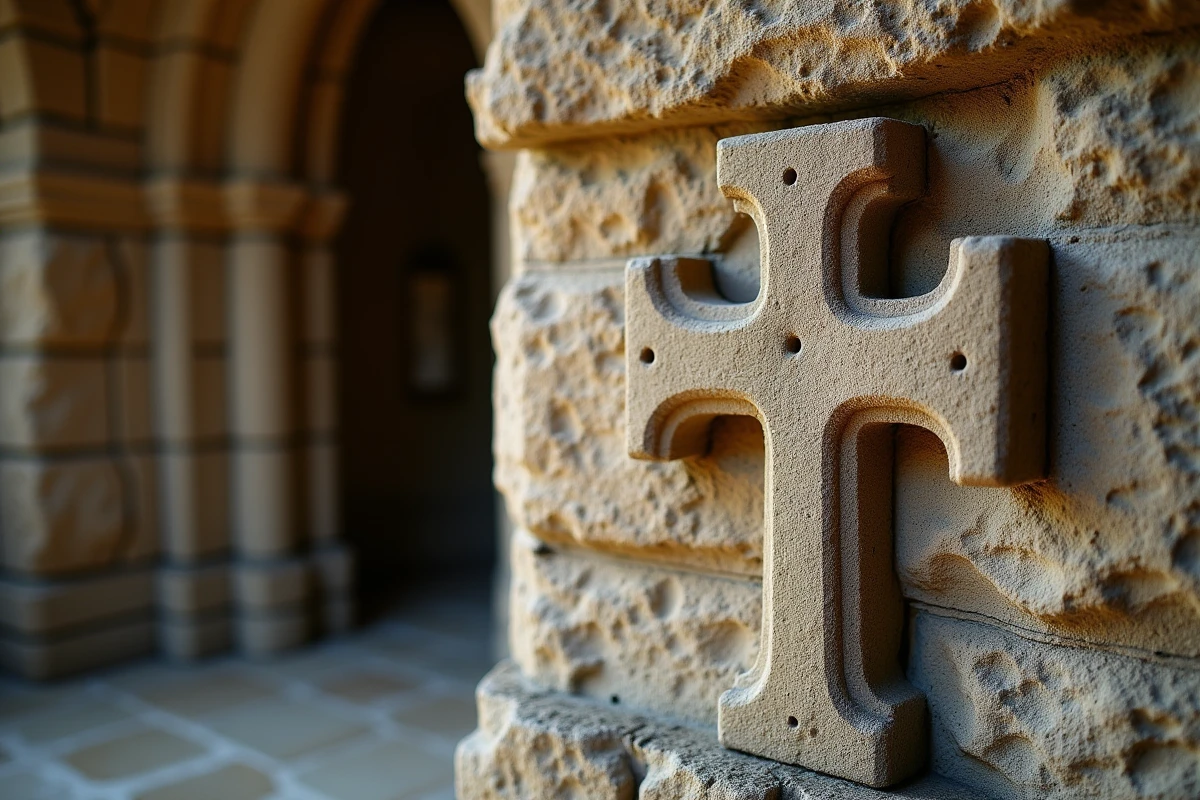
The symbols of the Templars function as a coded visual language, where each shape serves a specific purpose: to identify membership, signal a rank, or remind of a spiritual commitment. The pattée cross, the seal with two knights, and the gonfanon baussant are not mere ornaments. They are markers of military and religious identity, forged in the context of the Crusades and Christian chivalry of the 12th century.
Iconographic Convergence Between Templars and the Order of Saint Michael
Several works of medieval history note an iconographic convergence between the Order of the Temple and the Order of Saint Michael. Shared Norman pilgrimages created visual bridges between the shells and the medallion of the archangel Michael on one side, and the various symbols of the Templars on the other.
This cross-influence explains why some Templar seals found in Normandy incorporate motifs close to Michaël’s symbolism. The knights of the Temple and those of Saint Michael shared pilgrimage routes, neighboring commanderies, and sometimes common protectors among the French nobility.
The Templar symbols were not constructed in isolation. They resulted from exchanges with other chivalric orders, which enriches their interpretation when placed within this network of mutual influences.
Pattée Cross and Seal with Two Knights: Military Functions of Templar Symbols

The red pattée cross remains the most recognizable symbol of the Order of the Temple. Its four flared branches at the ends recall the four Gospels, but its primary function was operational: sewn onto the white cloak, it allowed for the identification of a Templar knight amidst the chaos of a battlefield in the Holy Land.
The white of the cloak signified the purity of religious commitment. The red of the cross represented the blood of Christ and the willingness to martyrdom. This visual combination also served as a tactical signal: in the dust of a cavalry charge near Jerusalem, distinguishing an ally from an enemy could hinge on the color of a garment.
The Seal with Two Knights on the Same Horse
This seal, among the most commented on in medieval heraldic art, shows two knights sharing a mount. The classical interpretation sees it as a reminder of the vow of poverty of the early Templars, the Poor Knights of Christ founded around the beginning of the 12th century in Jerusalem.
The seal functioned as the legal signature of the Order. It authenticated charters, donations, and official acts. Its significance went beyond religious symbolism: it was an administrative tool that engaged the collective word of the Order of the Temple.
The Gonfanon Baussant
This bicolor banner, black and white, bore a name that likely comes from the Old French “baussant” (variegated). Its two colors represented:
- Black for the earthly world and the mortal condition of the knight, reminding humility in the face of death in battle
- White for spiritual purity and the divine mission of protecting pilgrims in the Holy Land
- The combination of the two for the dual identity of the Order, both religious and military, monk and soldier
The gonfanon baussant served as a rallying point during battles. As long as it remained raised, the Templars were forbidden to leave the fight, making it a symbol of absolute commitment as well as a command tool.
Templar Motto and Spiritual Symbolism in Christian Chivalry
The motto of the Order of the Temple, “Non Nobis Domine, Non Nobis, Sed Nomini Tuo Da Gloriam” (Not unto us, O Lord, not unto us, but to Thy name give glory), constitutes a verbal symbol that complements the visual symbols. This phrase, drawn from Psalm 115, summarizes the Templar stance: every action is performed in the name of God, never for personal glory.
This principle structured daily life in the commanderies in France and the Holy Land. The rule of the Order, drafted under the patronage of Bernard of Clairvaux at the Council of Troyes, imposed strict monastic discipline. The knights owned nothing personally; even their equipment belonged to the Order.
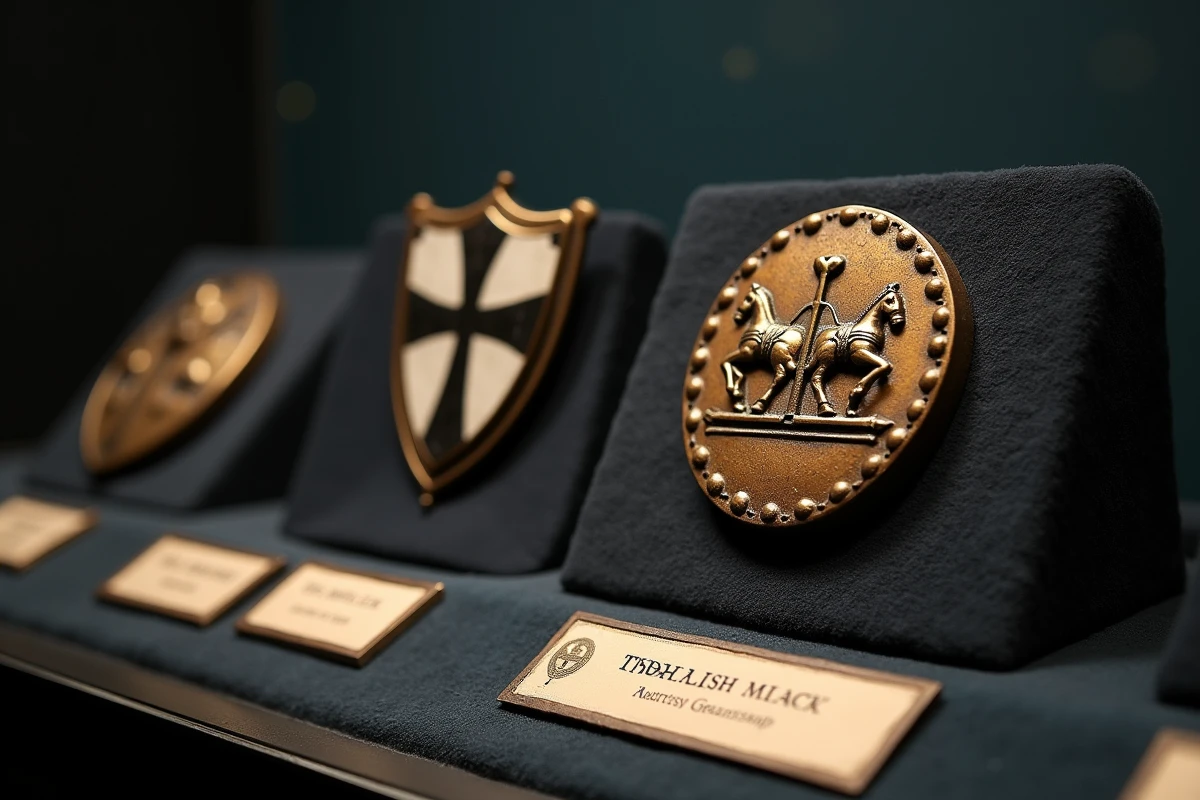
The Templar symbolism thus articulates three levels: the visual (cross, seal, gonfanon), the verbal (motto), and the behavioral (rule of life). These three levels worked together to form a coherent system of identification and control within medieval chivalry.
Templar Symbols and Inner Chivalric Retreats: Contemporary Reinterpretation
In recent years, a growing trend in Europe sees associations and personal development groups reclaiming Templar symbolism for therapeutic practices. So-called “inner chivalry” retreats use the pattée cross, the gonfanon, or the motto “Non Nobis Domine” as supports for meditation and self-work.
These reinterpretations detach the symbols from their original military context. The pattée cross, designed to identify a fighter on a battlefield, becomes a tool for emotional recentering. The vow of poverty symbolized by the seal with two knights transforms into an exercise of material detachment.
This multiplication of associations claiming Templar heritage is not limited to the spiritual. Charitable initiatives also adopt these symbols, with no direct link to historical chivalry. In France, a 2024 ordinance now aims to regulate the abusive commercial use of symbols like the pattée cross, to protect cultural heritage against mercantile appropriations.
- Historical reenactors observe a decline in interest for authentic Templar seals in favor of modernized esoteric versions
- “Inner chivalry” retreats transform medieval military tools into supports for personal development
- French regulations are beginning to distinguish between heritage use and commercial exploitation of these symbols
The gap between the original function of Templar symbols and their current use illustrates a broader phenomenon: each era projects its own needs onto the inherited forms of the past. The pattée cross identified a soldier ready to die in the Holy Land; it now adorns bracelets sold as tools for recentering. The form has traversed nine centuries, but not its function.