Until the end of the 18th century, peasant marriage in France was based on a simple principle: the union of two landholdings, not of two individuals. Romantic feelings existed in the countryside, but for a long time, they held no official place in the marriage decision. Understanding how love found its way into this rigid framework requires distinguishing several mechanisms, from the role of the family to the influence of migrations and wars.
Land contract and lineage logic: the basis of peasant marriage
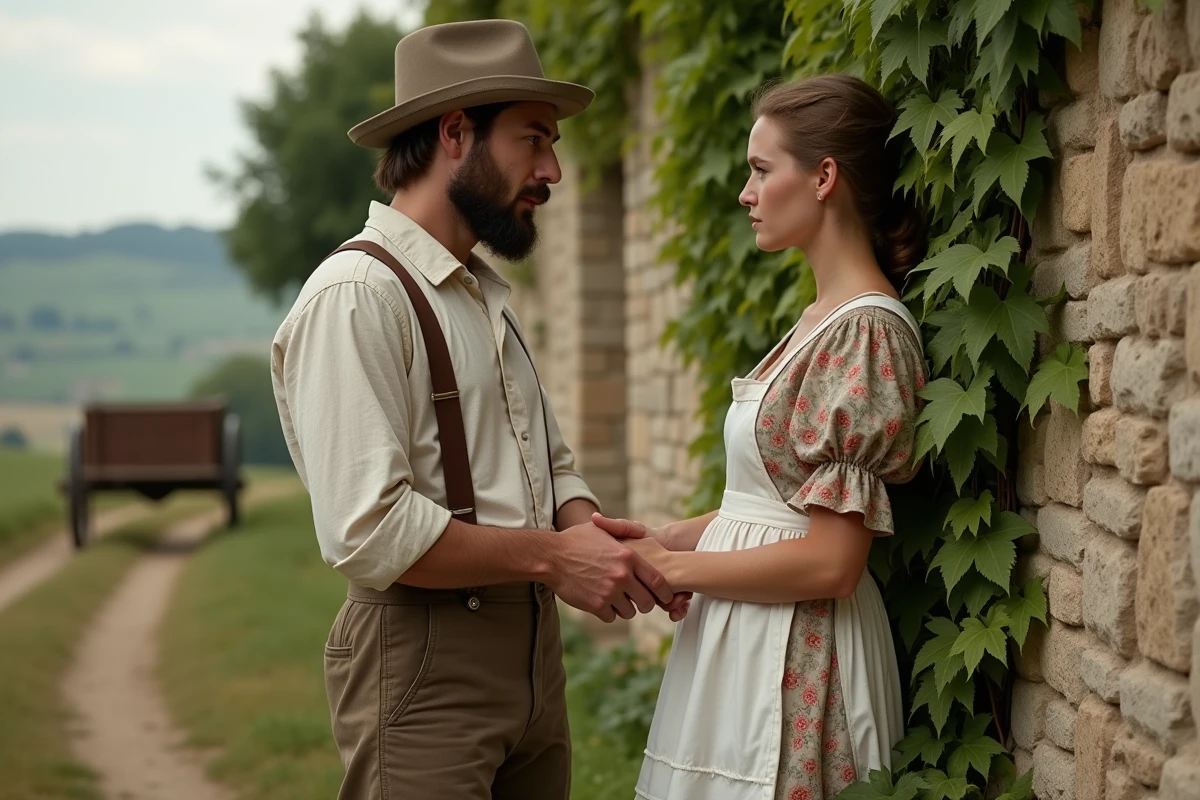
In the rural French world before the Revolution, marriage was primarily a transfer of property between two families. Land, livestock, and agricultural equipment were the main stakes. Parents negotiated, sometimes with the help of a local intermediary, and the marriage contract specified the dowry, the contributions of each party, and the succession clauses.
The consent of the spouses has been required by the Church since the Council of Trent, but in practice, this consent remains very regulated. Young people often know each other since childhood, attending the same gatherings and parish festivals. The choice of a spouse occurs within a limited geographical perimeter, sometimes restricted to a few neighboring parishes.
When studying love marriage among peasants, it becomes clear that the very notion of “personal choice” only makes sense if one first understands this constraining framework. Love is not forbidden, but it must coincide with the interests of the family group to lead to a wedding.
Romantic vocabulary in conscripts’ letters: a direct trace
Historians have few written sources on peasant feelings before the 19th century. Notarial contracts say nothing about emotions. Parish registers are limited to dates and names.
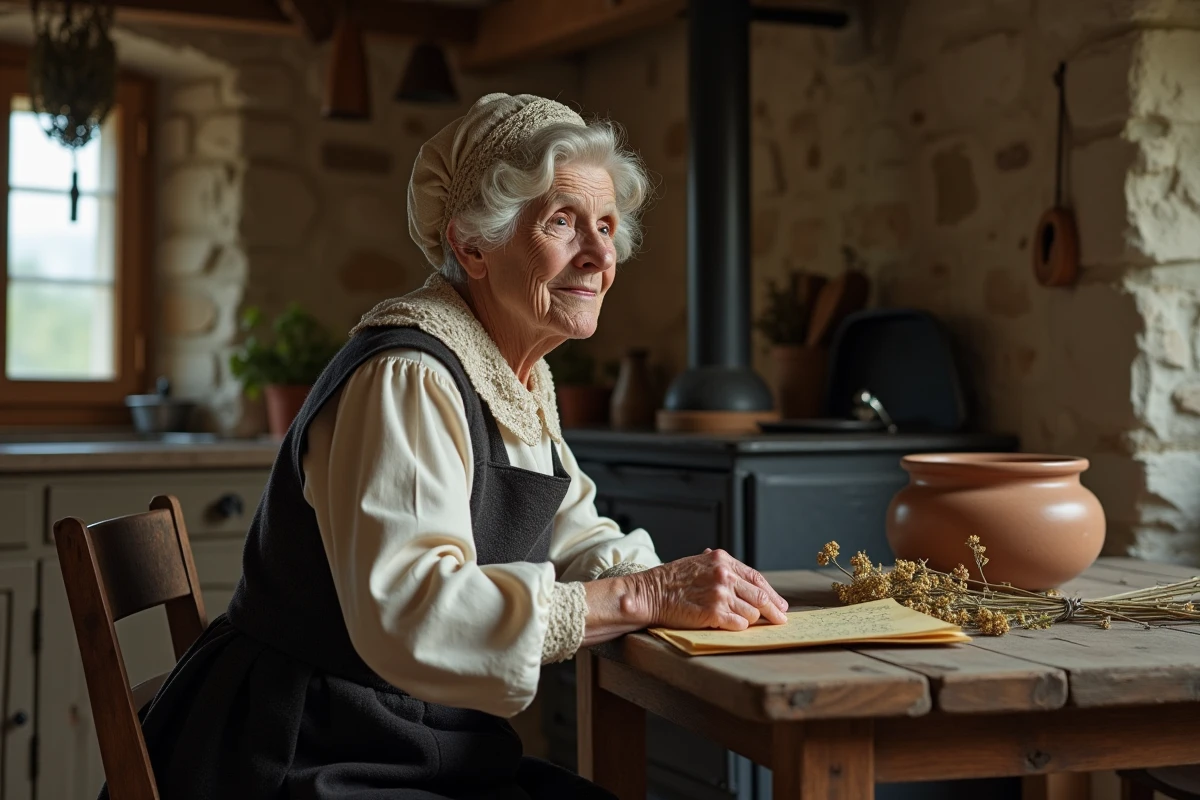
It is through the correspondences of conscripts, particularly during the war of 1870 and World War I, that researchers have identified an explicit rise in romantic vocabulary in exchanges between peasant fiancés. These letters, often awkward in their spelling, employ expressions of personal attachment absent from previous generations, even as marriage contracts retain their traditional form.
This gap between private correspondence and legal documents is revealing. Sentiment progresses in the intimate long before it alters the official structures of marriage. Peasants who write “my dear betrothed” or “the one my heart has chosen” then sign strictly patrimonial notarial acts.
Generational asymmetry: from duty to love after 1945
Oral surveys conducted between the 1970s and 1990s in France, as well as in rural Italy and Spain, highlight a clear shift between two generations.
- Grandparents, married before World War II, describe their union as a “duty” or a “reasonable arrangement,” even when real affection existed between the spouses.
- Their children, married after 1945, spontaneously use the expression “to marry for love,” even in contexts where the family continued to strongly influence the choice of spouse.
- This generational asymmetry appears consistently across several European regions, suggesting a broad cultural phenomenon rather than a local peculiarity.
The change is not due to the disappearance of family pressure. It stems from a new narrative that young spouses construct about their own marriage. The material reality of peasant marriage (land sharing, geographical proximity, parental approval) remains similar, but the way spouses talk about it transforms radically.
The role of seasonal migrations in the spread of the love model
The ideal of marrying for love did not spread solely through books or newspapers. Micro-local studies conducted in Eastern Europe (Poland, Romania, the Balkans) show that seasonal migrations played a decisive role. Young men who went to work in the city or abroad returned to the village with new marital models.
These migrants sometimes openly contested arranged marriages. Their urban experience had given them access to representations of couples based on individual choice, which they transposed into a still highly codified rural context. The same mechanism operated in France with the gradual rural exodus and military service, which exposed young peasants to different norms.
Village festivals and courtship rituals: the tolerated space of sentiment
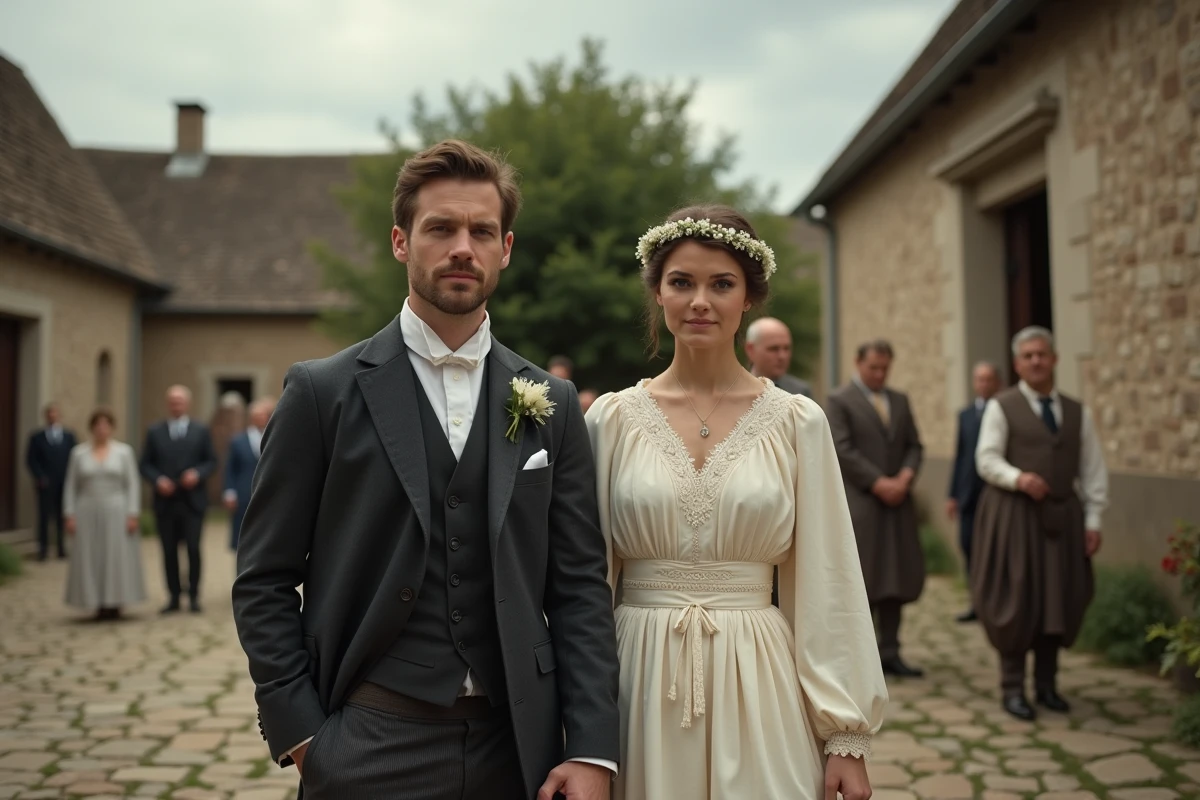
The peasant world never completely excluded romantic feelings. It assigned them specific spaces and moments. Agricultural and religious calendar festivals (May Day, winter gatherings, weddings themselves) constituted codified occasions for young people to meet.
In several French regions, a love code existed: offering a bouquet of flowers to a young girl, carving one’s initials on an object, singing a song under her window. These gestures were not spontaneous manifestations of romantic love in the modern sense. They followed precise rules, known to the entire community, and their meaning varied according to local context.
- The May Day bouquet signaled a serious intention and publicly committed the giver.
- Prolonged attendance at gatherings allowed young people to assess each other under the watchful eyes of the elders.
- The official proposal went through an intermediary (often a respected relative or neighbor) before any approach to the priest or mayor.
These rituals show that sentiment existed, but circulated within channels closely regulated by custom. The freedom of choice was exercised within a framework, never outside of it.
The transition to love marriage as we understand it today was not a sudden shift. It unfolded over more than a century, driven by wars, migrations, literacy, and the gradual transformation of the rural economy. Peasants did not wait for modernity to experience marital affection. They waited for the material and cultural conditions to allow them to make it a legitimate criterion for choice.