
An old issue of Vogue found in an attic does not automatically fetch a fortune. The value of a copy depends on a combination of print rarity, the fame of the cover, and the physical condition of the magazine. Some issues sell for a few euros at flea markets, while others reach remarkable amounts at specialized auctions.
Cover Photographer and Market Value of a Vogue
The name of the photographer or illustrator who signs the cover often weighs more heavily than the age of the issue. A copy associated with Cecil Beaton, Irving Penn, Richard Avedon, Helmut Newton, or Annie Leibovitz attracts specific demand, fueled by both fashion photography collectors and vintage press enthusiasts.
What drives up the value is the dimension of “first” cultural significance. A cover that shows a celebrity for the first time, introduces a graphic style, or marks a break in the editorial line becomes a unique object. Auction houses like Sotheby’s and Christie’s include these copies in their fashion and photography catalogs, giving them visibility among international buyers.
For those wishing to explore Carnet de Tendances, additional resources help to better understand which issues have real resale potential.
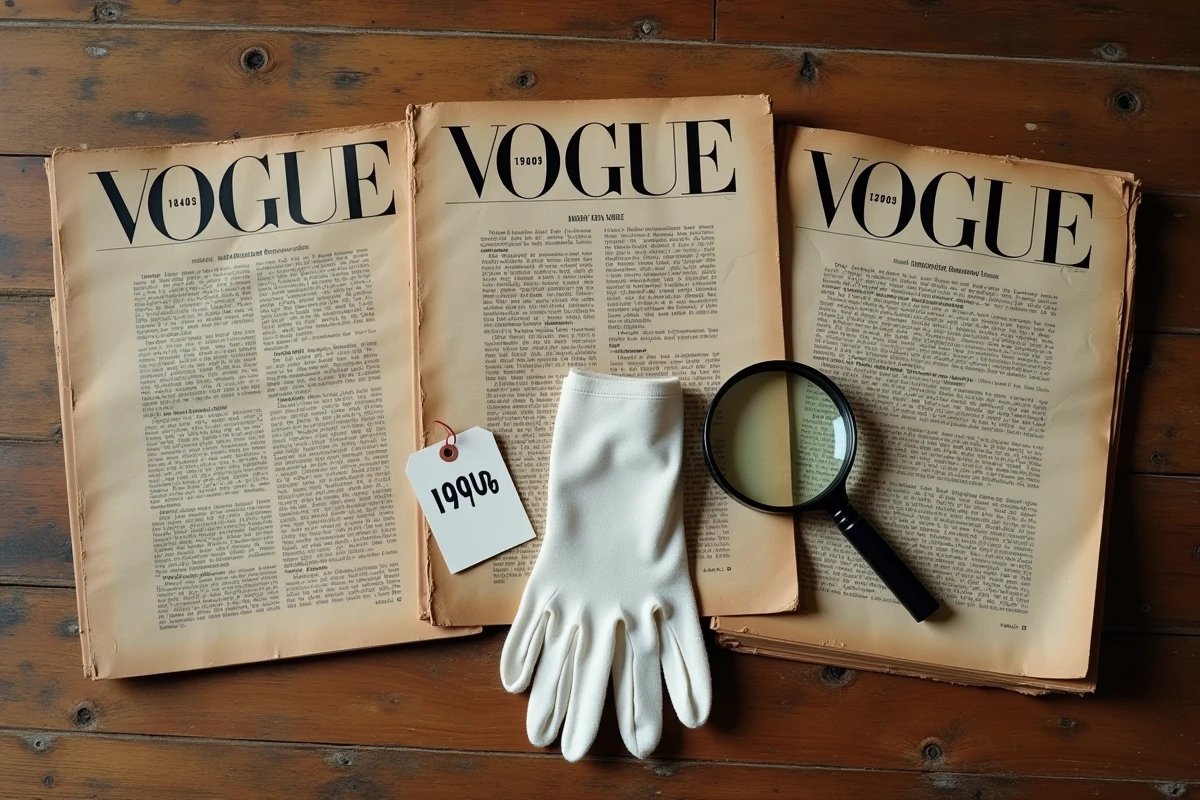
Condition: The Criterion that Deepens Price Gaps
Two identical copies of the same issue can be negotiated at very different levels depending on their physical condition. The market for collectible magazines increasingly borrows codes from the comic book market, where “graded” and encapsulated copies by certification bodies fetch significantly higher prices.
A Vogue with an intact cover, clean binding, and pages free of restoration stands out immediately from a yellowed or dog-eared copy. Experienced collectors check several points before acquiring an issue:
- The absence of tears or creases on the cover, even minor ones, as they significantly reduce value
- The sturdiness of the binding, especially on thick issues from special editions that tend to detach over time
- The absence of moisture, mold, or pronounced yellowing on the interior pages
- The presence of all original inserts and supplements, sometimes removed by previous owners
An old issue in poor condition is worth less than a more recent issue in perfect condition. The state of preservation takes precedence over raw age.
Special Issues and Anniversary Editions of Vogue
Issues related to recent cultural shifts often trade better than simple old copies. Anniversary editions, thematic issues dedicated to a major fashion figure, or limited regional editions generate interest that exceeds the circle of traditional collectors.
Vogue Paris (now Vogue France) has published several landmark issues, including issue 1000, sought after for its symbolic significance. Editions coinciding with a change in artistic direction or a first term of an editor-in-chief also attract attention.
What Distinguishes a Special Issue from a Simple Old Issue
A limited print run alone is not enough to create value. The issue must have recognized editorial significance: an iconic cover, a photographic portfolio reproduced in reference works, or an association with a specific cultural moment. The fame of the cover matters more than the rarity of the print run for the majority of buyers in the secondary market.

Vintage Vogue: Print Rarity and Provenance
Issues published before the 1950s are mechanically rarer, with low print runs and preservation over several decades being unpredictable. The very first issues of Vogue, dating from the late 19th century, are the most sought after, but their availability remains extremely limited.
Provenance also plays a role. A copy from a documented collection, an editorial library, or a photographic archive benefits from added credibility. Informed buyers are wary of copies without a clear history, especially since the proliferation of AI-generated cover counterfeits complicates the authentication of pieces offered online.
- Pre-war issues with illustrated covers (rather than photographic) interest a segment of collectors focused on graphic arts
- American, British, and French editions do not appreciate in the same way, with each market having its own references
- A copy accompanied by a period purchase invoice or an identifiable library stamp reassures potential buyers
Where to Trade a Collectible Vogue
Peer-to-peer sales platforms (Etsy, eBay) concentrate a large portion of transactions for issues of intermediate value. The rarest pieces go through auction houses or specialized antiquarian booksellers, who authenticate the copies and provide detailed descriptions of their condition.
The market for vintage fashion magazines remains less structured than that for rare books or comics. The absence of a central aggregator forces collectors to monitor several channels simultaneously, which sometimes lets good opportunities slip by for patient and well-informed buyers.